
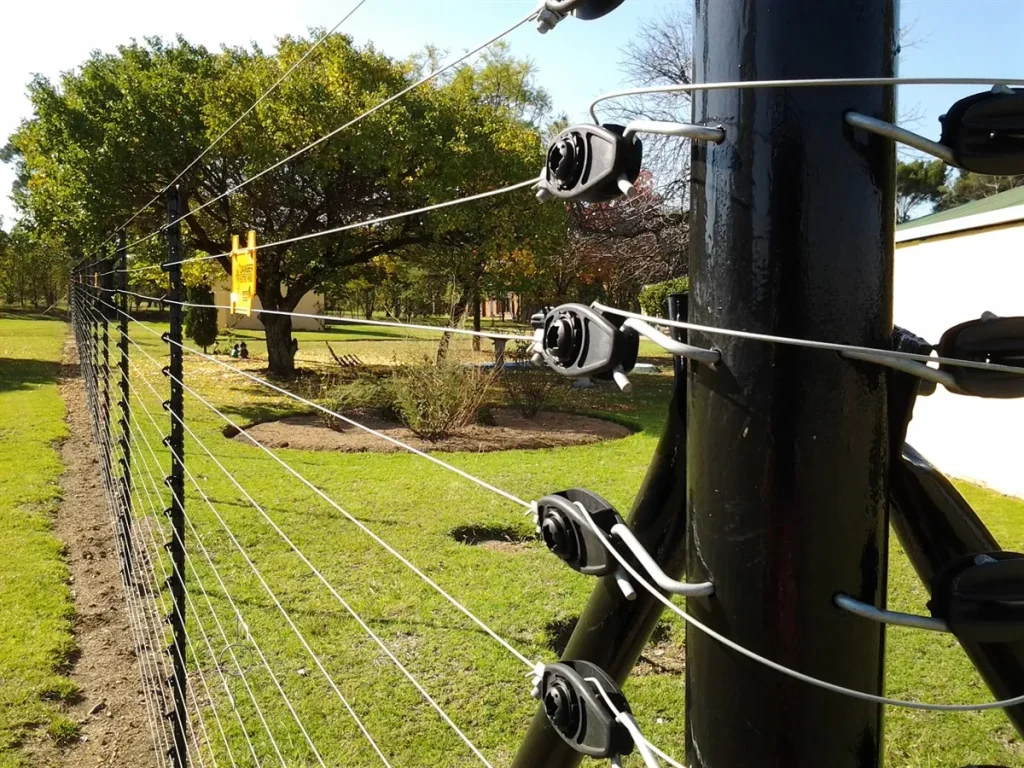
Lightning is one of the most common reasons an electric fence stops working in summer. A strike on or near the fence sends a surge down the wires, and the part that usually dies is the energiser.
You can’t stop lightning, but you can give the surge a shorter, safer way to the ground. A lightning diverter, a proper earth and surge protection on the power side do most of that work.
The energiser is the part lightning usually kills
A strike doesn’t have to hit your fence. A strike close by can push a surge into a long run of wire, and the wire carries it straight to the energiser.
- The energiser is the most delicate part of the fence, and the most expensive to replace.
- Long freestanding fences on smallholdings and farms are the most exposed: more wire, open ground, and often the highest metal around.
- A surge can also come in from the other side, through the mains supply or the cables that link the energiser to an alarm or a gate motor.
The Highveld gets roughly 5 to 10 ground flashes per square kilometre a year, most of them on summer afternoons. On an open plot with a long fence, that adds up over a few seasons.
A lightning diverter gives the surge a short path to the ground
A lightning diverter sits between the live fence wires and an earth spike, close to where the fence leads into the energiser. In normal use it does nothing. When a big surge comes down the wire, it jumps the diverter’s gap to the ground instead of going into the energiser.
- It belongs on the fence side, before the energiser.
- It needs its own earth spike, kept apart from the energiser’s earth. Your energiser’s manual shows how far.
- A diverter that has taken a big hit can be damaged itself. Look at it after a storm.
A real job: a Glenvista fence brought up to standard, with a dual lightning diverter.
A weak earth is the fault most fences hide
An electric fence needs a good earth to work at all, because the shock completes its circuit through the ground. The same earth system is part of what carries a surge away.
A weak earth shows up as low voltage on the fence, alarms in dry weather and more damage when lightning comes.
- Use enough earth spikes for the energiser and the soil. Dry winter soil on the Highveld needs more than most people think.
- Keep the clamps clean and tight. One corroded clamp on an earth spike is enough to cause trouble.
- The installation standard, SANS 10222-3, asks for the earth lead to run in conduit, not buried, so it can be checked.
Fence already dead after a storm? Book an electric fence repair.
Protect the power side as well
The fence wires aren’t the only way in.
- Fit a surge protector on the energiser’s mains supply.
- If the energiser is linked to an alarm panel or a gate motor, those cables can carry a surge too. Protect those links.
- A backup battery keeps the fence on in a power cut. It does nothing against lightning.
Lightning hits more than fences: on an Eikenhof farm it took out network switches and camera power supplies, and we had the cameras back up.
After a storm, check these five things before you call anyone
- Look at the energiser’s display or lights. Many show a fault, or go dark, after a surge.
- Check the mains: the plug, the breaker, and whether your area has power.
- Walk the fence line. Look for broken wires, burnt or cracked insulators, and branches on the wires.
- Look at the lightning diverter, if you have one, for burn marks.
- Take a photo of the energiser’s screen. It saves a lot of guessing.
Don’t open the energiser or touch the fence wires while it might still be on. Parts inside an energiser can hold a charge. If it smells burnt or shows scorch marks, leave it switched off and call a technician.
A new energiser means a new fence certificate
If lightning kills the energiser and it’s replaced, the fence has been altered. Insurer guidance is that small repairs, such as a broken wire, don’t need a new electric fence certificate, but a replaced energiser does.
The certificate only transfers to a new owner if nothing has changed since it was issued. So if you might sell, ask for the certificate to be redone when the energiser is replaced. See electric fence COC inspections, or read the electric fence COC explained.
It’s easier to fix a weak earth in October than an energiser in January
A check before the worst of the storms finds the problems a surge will find later. On a maintenance plan visit we test the fence voltage zone by zone, the earth, the diverter and the surge protection, and you get a written report.
We quote before we fix, and we never go over the quote without your OK. Repairs carry the 3-month parts-and-labour warranty the Consumer Protection Act requires.
Fence dead after a storm? Send us a photo of the energiser
WhatsApp us a photo of the energiser or call 083 659 0957. We’re in Walkerville and repair fences across the Midvaal and Joburg South.
Questions people ask
Can lightning damage an electric fence energiser?
Yes. It’s one of the most common causes of a dead energiser in summer. A strike on or near the fence sends a surge along the wires into the energiser, unless a lightning diverter and a good earth take it to the ground first.
What does a lightning diverter on an electric fence do?
It gives a big surge a short path to the ground. It sits between the live wires and its own earth spike, before the energiser, and does nothing in normal use.
Should I switch off my electric fence in a storm?
You don’t need to. Unplugging the energiser protects it from a surge on the mains, but not from one coming down the fence wires. The real protection is a diverter, surge protection and a good earth.
Do I need a new electric fence certificate after a lightning strike?
Only if the system was changed. A small repair such as a broken wire generally doesn’t need one, but a replaced energiser does, and you’ll need a current certificate when you sell.
Why does my electric fence alarm go off in storms?
Usually because something is leaking voltage to the ground: wet plants on the wires, a cracked insulator or a weak earth. A storm makes small faults show. If the alarm only stops once things dry out, have the fence checked.